


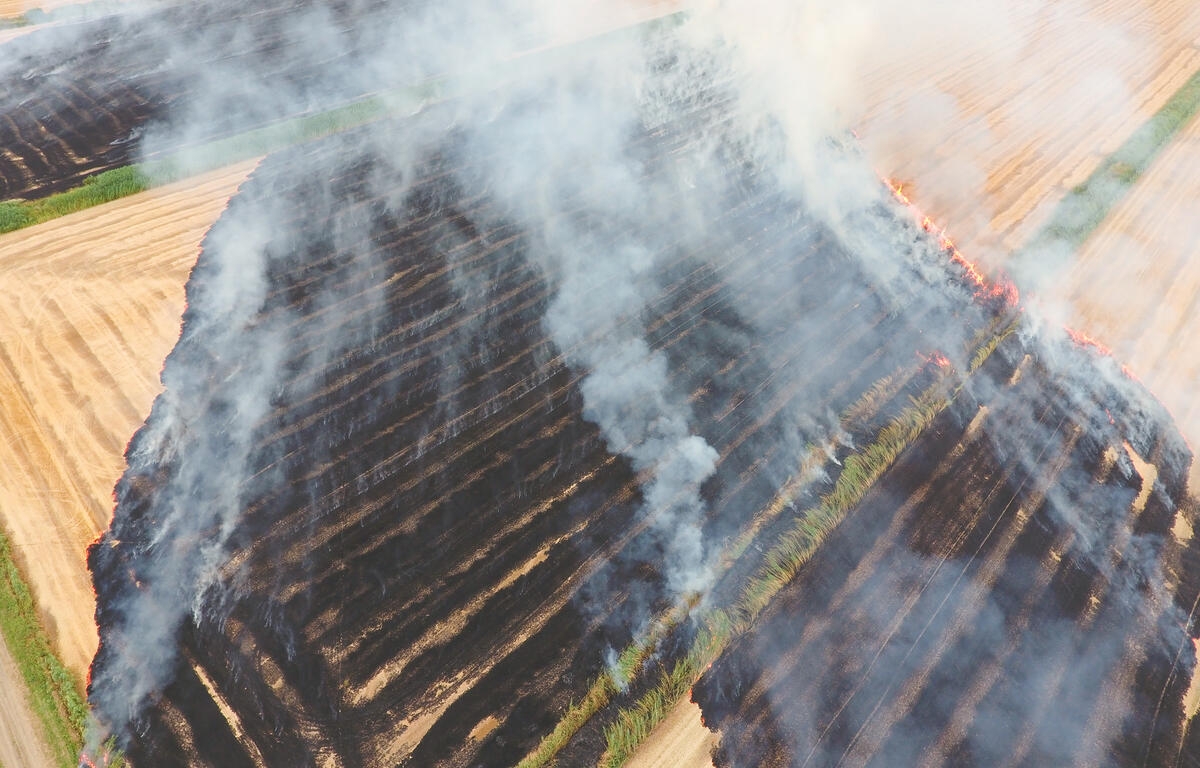

Jonesboro, AR – Jonesboro Right Now – As rice harvest continues across Northeast Arkansas, farmers will soon be entering another familiar phase of the agricultural cycle: removing crop residue from harvested fields, including through prescribed burning.
But this year, farmers face a more complicated set of conditions.
Drought, extreme heat, dry vegetation and widespread burn bans have created elevated wildfire danger across Arkansas. At the same time, the state’s rice harvest is moving ahead of its normal pace, meaning more harvested fields — and eventually more crop residue — will be ready for management.
| ADD US ON GOOGLE NEWS: Click here to see more local news from Jonesboro Right Now
The Arkansas Department of Agriculture is reminding farmers and land managers to take extra precautions as prescribed burning season approaches.
Controlled burning remains an important agricultural tool. Burning crop residue following rice, soybean, corn and cotton harvests can help prepare fields for the next growing season and reduce pests and diseases.
But officials emphasize that when, where and under what conditions a field is burned matter, especially when smoke could reach a highway or populated area.
A Deadly Reminder from Jackson County
The dangers of smoke crossing a highway are not theoretical.
In October 2023, a field fire in neighboring Jackson County produced heavy smoke that moved across then-U.S. Highway 67, dramatically reducing visibility and contributing to a 16-vehicle chain-reaction crash.
Two Ohio men — 68-year-old Thomas Blevins and 55-year-old Terry Lutz — were killed, and six other people were injured.
According to Arkansas State Police, the smoke from the burning field blinded drivers and contributed to the crash.
The incident eventually resulted in the September 2024 arrest of Charles Benham, 55, of Alicia. Benham, who was working for Cason Farms, was charged with felony reckless burning in connection with the fire.
Court proceedings in that case remain pending. The case was most recently continued until Nov. 9. Benham has not been convicted of the charge, and the allegations against him remain unresolved.
Burn Bans Add Another Complication
As of Tuesday, Sept. 1, the Arkansas Department of Agriculture reported 64 of Arkansas’ 75 counties under burn bans, including all Northeast Arkansas counties except Mississippi County. Most of the state is currently classified as having a high wildfire risk.
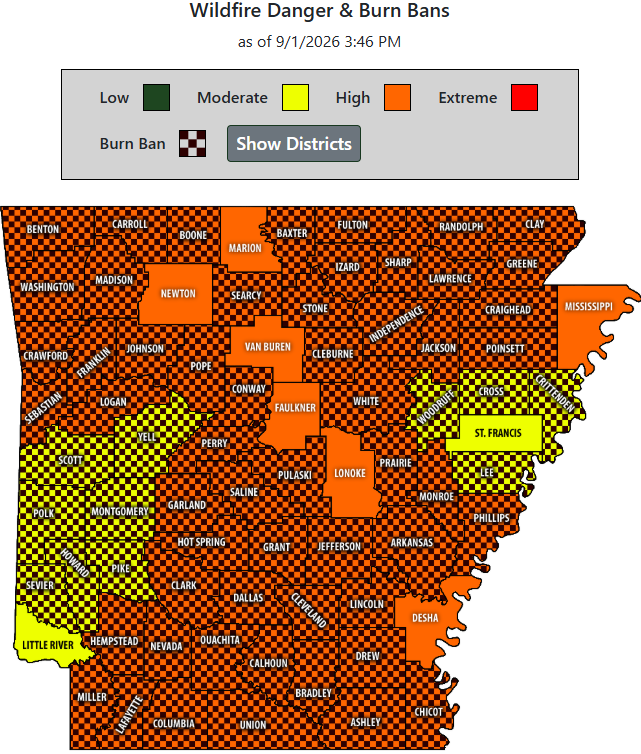
Craighead County’s current burn ban was issued Aug. 14 because of extreme heat, dry conditions, winds and concerns about firefighter safety. The county order prohibits outdoor burning until conditions improve and the ban is lifted.
That is particularly important as agricultural burning increases.
Farmers should check the current burn-ban status in their county before burning and understand exactly what restrictions apply to their location. Local county orders can impose restrictions beyond general state regulations.
The Department of Agriculture is also asking producers to report prescribed fires before ignition through the department’s website or by calling 1-800-830-8015.
Farmers are encouraged to pay particular attention to smoke-sensitive locations, including highways, neighborhoods and nearby communities, and to use the state’s voluntary smoke-management guidelines.
The department also recommends using the Fire Smart app to check weather and smoke conditions and to report prescribed burns.
What Drivers Should Know
For drivers, the biggest danger may not be the fire itself; it may be the smoke.
Smoke can move quickly across a roadway, and visibility can deteriorate rapidly when wind pushes smoke toward traffic.
Drivers who encounter heavy smoke should slow down, increase following distance and be prepared for traffic to stop suddenly. They should never assume they can see far enough through a smoke cloud to continue at normal highway speeds.
And if visibility becomes severely restricted, getting safely away from the smoke should take priority over continuing through it.
A Different Kind of Harvest-Season Concern
For farmers, prescribed burning remains a useful and established agricultural management practice.
But 2026 has brought a particularly difficult combination of conditions: dry fields, extreme heat, drought, high wildfire danger and widespread burn bans.
The Arkansas Department of Agriculture advised that volunteer fire departments should prepare for increased call volume in the coming weeks as conditions remain dry.
As rice harvest continues and more fields are cleared across Northeast Arkansas, residents can expect to see more agricultural activity and potentially more smoke.
The message from state officials is straightforward: know the conditions, know the restrictions, report prescribed burns before ignition, and take extra precautions when smoke could affect roads or nearby communities.
For farmers, that means treating prescribed burning as a carefully planned agricultural operation.
For drivers, it means remembering that a field fire several hundred yards away can become a serious highway hazard when the wind and weather are working against you.
| DAILY BRIEF: Sign up for the Jonesboro Right Now Daily Brief Newsletter