


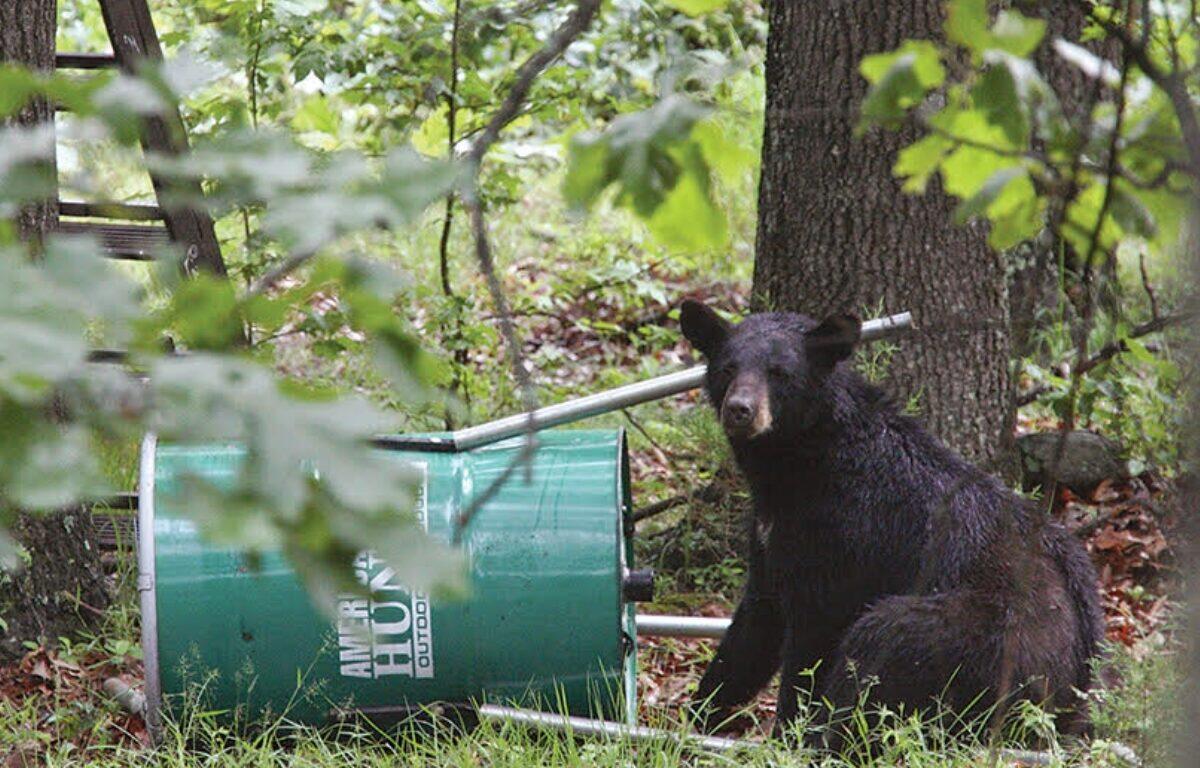

Jonesboro, AR – Contributed – Flowers are blooming, days are growing longer, and Arkansas bears are on the move. Each spring, young black bears emerge from their dens and strike out to find new territories.
While sightings of these misguided youths certainly grab the attention of people living in neighborhoods bordering bear country, they often move on as long as people don’t give them a reason to stay.
Bears are part of Arkansas and have been since before the state was settled. In fact, Arkansas once was so rich with black bears that its unofficial nickname was “The Bear State.” Unrestricted hunting for their fur and fat led to the bear’s rapid decline by the early 1900s.
Thanks to the efforts of conservationists and biologists with the Arkansas Game and Fish Commission, Arkansas again has bears throughout much of the state in the areas they once roamed. Understanding how to coexist with these animals starts with a quick look at bear biology.
Unlike deer, which reproduce each year they are mature, female bears only have cubs every other year, spending two winters with their cubs. The cubs are newborns during their first den cycle, then they spend the whole year learning how to be a bear and overwinter once more as yearlings.
At the end of this denning cycle, young females are allowed to stay in a portion of their mother’s territory, but the young males are forced away to find a new home.
“This is how nature enables bear populations to expand and protects against inbreeding,” Spencer Daniels, AGFC Bear Program coordinator, said. “The young males look for new suitable habitat, and the top priority is finding ample food resources.”
But open trash cans, wildlife feeders and cooking grease are just as tempting to a young black bear as the native berries and soft mast they typically seek this time of year. This can put these young bachelor bears in some bad situations, especially if humans don’t remedy the situation quickly.
“To that bear, it’s just free food,” Daniels said. “So locking those things away this time of the year is important to prevent nuisance encounters. You may still have a bear wander across your yard in bear country this time of the year, but if they don’t find food, they won’t stick around.”
Black bears, the kind native to Arkansas, are not normally aggressive, but they are still wild animals. If people allow the bear to become comfortable near their homes or land, they may set up shop. At that point, you become the intruder and the obstacle between them and “their” food.
“The first step to any nuisance bear phone call we receive is for the landowner to put away any of these possible attractants,” Daniels said. “That includes deer feeders. The deer don’t need corn or other feed this time of the year with spring vegetation greening up, anyway. That’s usually all it takes for the bear to move on.”
The last thing you should do is let the bear get comfortable. Bears are naturally afraid of humans and the ruckus we create. It’s important to maintain that relationship. Most bears that have to be removed by wildlife managers start as a welcome guest for photo opportunities and conversation to a landowner, but once the novelty wears off or the bear decides to damage property to get to more food, things get serious.
“Making noise, yelling and throwing a rock or stick can be enough to give the message that the bear is not welcome,” Daniels said. “Make yourself look as large and obnoxious as possible. Ninety-nine times out of a hundred, the bear won’t stick around. If it does, back away slowly while continuing to create noise until you are in a safe spot and report it to the nuisance wildlife hotline immediately. We can respond from there.”
More information about bear awareness and bear safety can be found on the cooperative website www.Bearwise.org. This site was developed by bear biologists throughout the Southeast and includes information specific to Arkansas.
Keep your yard “Un-bear-able” by:
- Securing trash cans in a garage or shed
- Cleaning grease off outdoor grills
- Emptying wildlife feeders until late summer (check feeding and baiting regulations in a current Arkansas Hunting Guidebook).
Nuisance Wildlife Hotline: 833-345-0315