


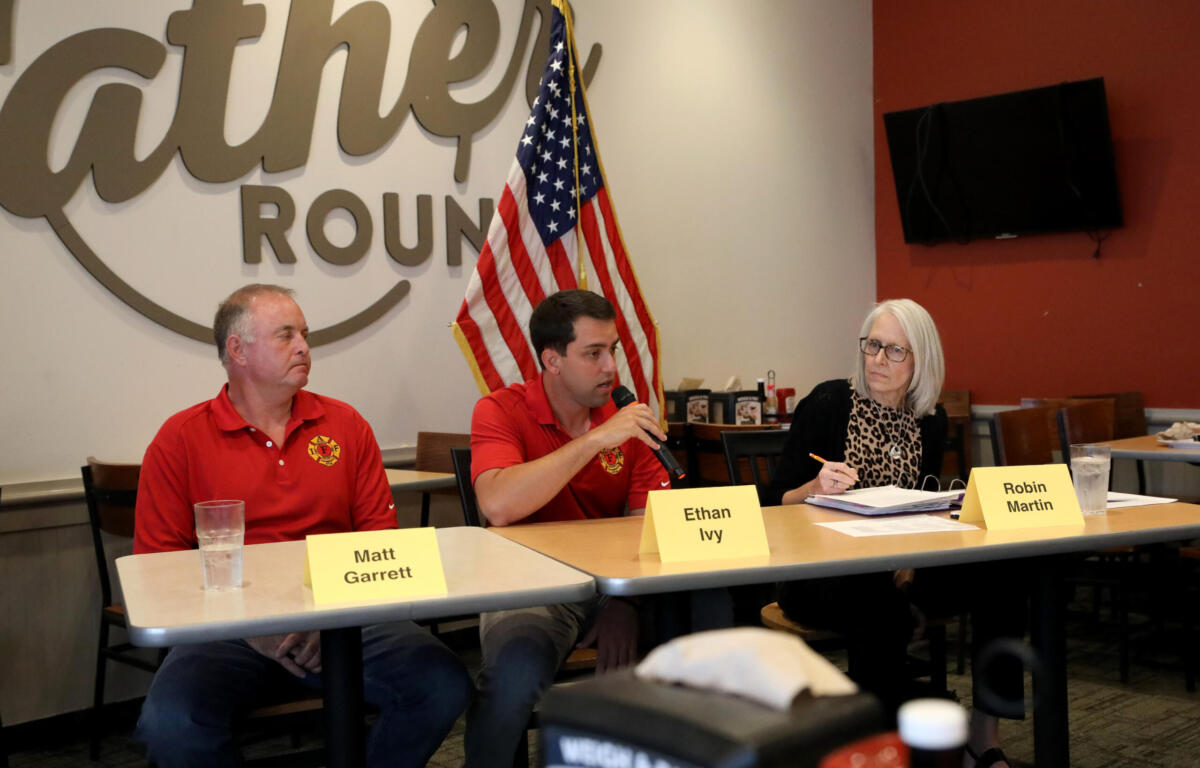

Jonesboro, AR – Jonesboro Right Now – Panelists on both sides of the debate regarding a public safety sales tax on the general election ballot debated at the Kiwanis Club of Greater Jonesboro meeting on Wednesday.
Currently before voters is a proposed 5/8 cent sales tax, which, if approved, will be used to fund “public safety services, initiatives, facilities, infrastructure, maintenance and operations.” Money collected from this tax would be dedicated to police, fire and E-911 dispatch services. If it passes, Jonesboro’s combined sales tax will increase from 8.5% to 9.125%.
| PREVIOUS DEBATE COVERAGE: Proposed Public Safety Sales Tax in Jonesboro Debated on KLEK 102.5
The roughly 45-minute debate brought together firefighters Matt Garrett and Ethan Ivy representing Safety First for Jonesboro, a ballot committee that petitioned over the summer to place the issue on the ballot, and Robin Martin, a member of Citizens Taxed Enough, a group that opposes the proposal.
Each group had five minutes for opening statements, with Safety First for Jonesboro speaking first due to winning a coin toss before the debate began. After opening statements, questions were opened to Kiwanis Club members, in which each group had two minutes to respond, alternating who answered first. Citizens Taxed Enough spoke first during closing statements, which were three minutes.
Questions included below reflect those of Kiwanis Club members and have been edited for clarity and conciseness.
Opening Statements
Garrett, who is the chairman of Safety First for Jonesboro and a 22-year firefighter, said Jonesboro’s public safety services had been doing “the best we can with what we have.” Public safety services were in need of additional staffing and equipment, he said, and the Jonesboro Fire Department will need additional fire stations as the city continues to grow.
“We’re the front line people that are dealing with this on a daily basis. So, who more can you trust, in my mind, than the people that are dealing with this on a daily basis that know the needs, know the shortfalls,” Garrett said.
During her opening statement, Martin said Citizens Taxed Enough was not against public safety, and wanted the city’s departments to be well-funded and staffed. The group’s issue with the tax, she said, was where the funding was coming from.
| READ BEFORE YOU VOTE: JRN’s Guide to the 2026 Craighead County Ballot
Referencing the city’s revenue and expenditures from 2018-2025 that were pulled from the Arkansas Legislative Audit, Martin said general fund revenues had increased by around 7% each year, with law enforcement expenditures increasing 9.3% on average annually. Public safety revenues, she said, saw an average increase of 2.6% annually.
She said the city had not budgeted its revenues appropriately, and not prioritizing funding public safety departments over the years. The group also had concerns over the ballot issue’s language, among other issues.
“We also share concerns of recent decisions made by our city leaders, where they have prioritized lesser important projects over what should be their first priority of public safety,” Martin said.
QUESTION: The money needed to fund public safety needs to come from somewhere. If this tax does not pass, where does that money come from? What is being overfunded at present?
Martin responded that the city needed to reevaluate its priorities and push more general fund revenues toward public safety.
Garrett responded that looking at city’s unrestricted funds, public safety accounts for about 60% of the total share, with sanitation taking up another 10%. From there, he said, all other city departments, such as streets or parks, are funded through the remaining 30%.
“If the rest of the city is running on 30%, I don’t see how much more you can squeeze out of it,” Garrett said. “You can squeeze all you want to, but eventually, you’re gonna have to pay up what it takes.”
He added that that was why Safety First for Jonesboro proposed the sales tax, to allow the city to take care of its other responsibilities while having a dedicated public safety income flow.
QUESTION: Why when there is a public need, the proposed solution is a tax? Why are these needs not accounted for in city budgets?
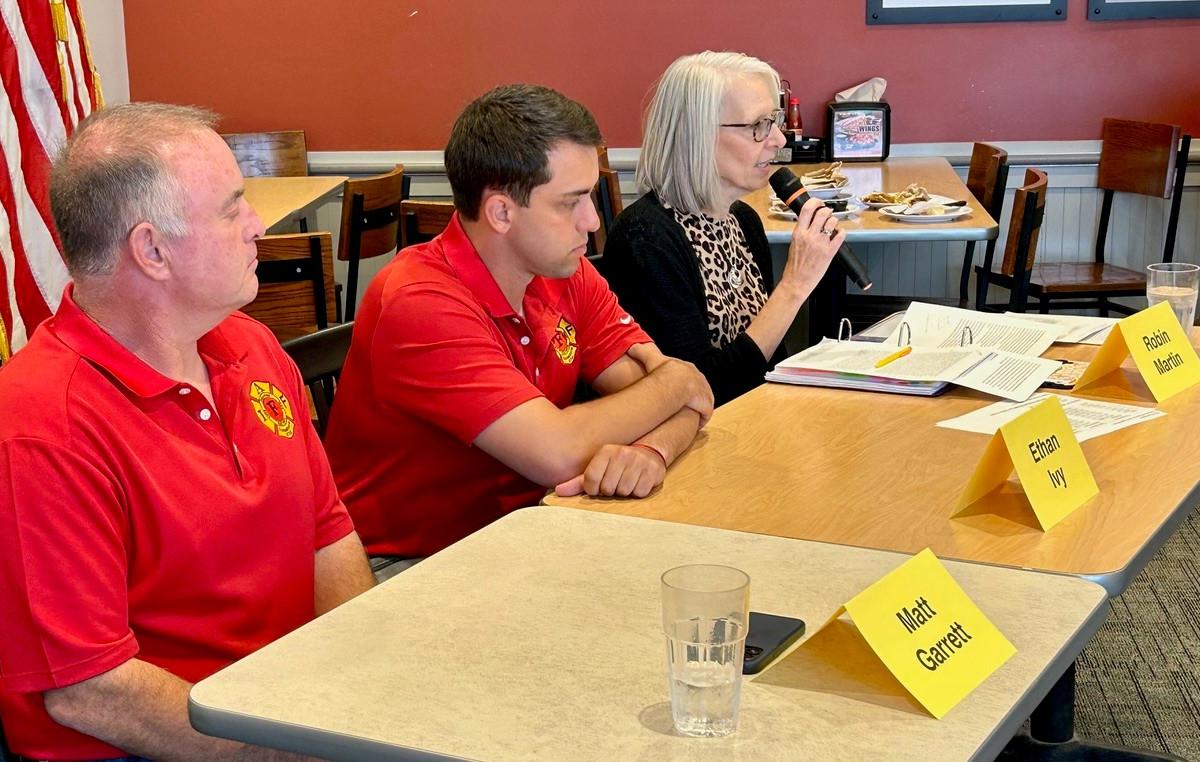
Ivy responded that public safety is “very expensive” and has steadily become more expensive in relation to inflation. He referenced a previous public safety tax passed in 2009 that later sunsetted. With that tax, he said, the city funded new fire stations and other equipment, but since that sunset, the need has only increased.
The tax, if it passes, will bring in around $16 million per year, Ivy said, that could address most needs of Jonesboro’s public safety departments.
“It costs a lot of money, and the simplest way to address these needs is a sales tax, something that will be paid for by visitors to our town who use our resources, as well as people in town,” Ivy said.
Martin responded that as overall taxes increase, so too does the amount of money collected by sales taxes.
“The price of a bill goes from $2 to $3, that 8.5% on that, automatically creates a raise basically for all people who get all the government entities who get that tax revenue,” she said. “There’s already a built-in tax increase.”
She contended that the additional revenues needed to fund public safety were already “built in,” and that the city needed to use its money wisely and budget appropriately.
QUESTION: As Jonesboro grows, can you speak to the needs of the city and what it has on hand that can be used to meet these needs? What about depleting the city’s reserves?
Martin responded that excess reserves were part of, if not a “big part” of the answer to funding public safety. She added that city’s cash balances do not fluctuate as much as a county’s, as a county relies on fluctuating property taxes for revenue.
She added that city leaders had been quiet as far as voter information regarding the issue, such as how projects funded by the tax would be spaced out and other needs would be addressed.
Garrett responded that the city had about $8 million to $9 million in money to be used at the city’s discretion. Through the tax, he said, the city would receive the funding it needed for public safety and help Jonesboro progress overall.
QUESTION: Safety First for Jonesboro chose to approach this issue by conducting a petition drive to place it on the ballot, as opposed to going through the city council and asking it to set an election. Why did your group do this, and do you feel you have support from city leaders?
Ivy replied that the group chose the petition route for several reasons. By collecting signatures, it allowed the group to speak directly with citizens, which he said was a “healthier approach.”
He added that the Safety First for Jonesboro did not want the issue to be “attached to any particular political group or how any people feel about certain politicians.”
“I don’t take it lightly that we’re asking people to pay an extra 5/8 of a cent on their sales tax. It comes out, it’s not going to raise our sales tax rate higher than most of the cities here in Arkansas; but, it’s not nothing,” Ivy said. “We wanted to be able to address that directly with the people that it would affect.”
| ADD US ON GOOGLE NEWS: Click here to see more local news from Jonesboro Right Now
Martin responded that while she understood that city revenues needed to progress as a city changes, she felt city leaders are “very quick to brag” on Jonesboro’s years of clean audits.
“I did audits for several years, and I’ll tell you that this is a pretty low hurdle to get over. It would be like me bragging to my husband that I completed the Walmart shopping this week without stealing anything,” she said.
She said that instead of the city pointing to clean audits, leaders should work to improve upon its trust and respect among citizens.
“Voting in taxes after they were defeated at the ballot does not build trust and respect. Using funds on wants or less important needs, like new parks and side paths and shooting sports complexes, over their first priority of public safety, does not build trust and respect,” Martin said.
She continued: “Spending hundreds of thousands of dollars on park rangers and Flock cameras does not build trust and respect. Hiring the mayor’s son as a park ranger does not build trust and respect. Prioritizing various grants for wants over funding police, fire, and 911, does not build trust and respect.”
QUESTION: Does there currently exist in the city’s budget a fund to draw from in case of natural disasters or emergencies, or is some of that planned for in this proposed tax?
Martin said emergencies and disasters were what the city’s reserve funds were for, and then pointed to Jonesboro’s sales tax rate of 8.5%.
“Cities don’t spend sales tax rates. They spend dollars. So, you have to compare dollars to dollars,” she said.
She compared Walnut Ridge’s 11% sales tax, which generates around $2.8 million in revenue, while Jonesboro’s 8.5% generates closer to $48 million, she said. She pointed to other Arkansas cities having higher median incomes compared to Jonesboro, which allowed them to have higher sales tax rates.
“Poverty rates vary greatly. Jonesboro’s is at 22.8%,” she said. “Rogers’ is at 10.5%, so there’s a lot of people here that cannot afford a few hundred dollars in any place.”
Garrett responded that other cities similar to Jonesboro’s size had higher tax rates, and that the median income in the city was $55,000.
“On that family spend in Jonesboro, this is a tax that’s gonna cost the average citizens of Jonesboro $10 to $15 a month,” Garrett said. “As a family, not as a person, as a family.”
Closing Statements
Martin spoke first during closing statements, and referenced the Revolutionary War and fight against taxation and oppressive government. She said Jonesboro’s city government needed to improve its effectiveness and efficiency, and focus on prioritizing public safety departments with money already on hand. She encouraged a “no” vote on the tax.
“Then, Jonesboro can rightfully brag about low crime, short emergency response times, business-friendly government, and low taxes to encourage businesses and citizens to move to this wonderful city where their families can enjoy life, liberty, and the pursuit of happiness,” she said.
In his closing statements, Garrett referenced Martin’s Founding Fathers remarks, but said they “didn’t have a bunch of the other things that we have to deal with today that takes the money to make it all happen.”
It will take $16 million to fund the needed public safety improvements, he said, and asked the tax’s opponents to find the money in existing city budgets.
“Some people have talked about out there, ‘This may be a back door deal with the mayor’s office.’ Ethan [Ivy] and I, and some other members in the fire department, came up with this. We went around to the members of the fire department and voted this 95% to pursue this,” Garrett said.
“The money that’s going into this, the majority of this is coming out of our pockets. The firefighters’ pockets, along with some [police] and some dispatch people,” he continued. “If we didn’t believe in this the way we do, then we wouldn’t be here trying to ask the general public to support this, to provide better services for everybody.”
Early voting for the 2026 general election began Oct. 19 and will conclude Nov. 2. Election Day will be Tuesday, Nov. 3. Click here for a sample ballot.
| DAILY BRIEF: Sign up for the Jonesboro Right Now Daily Brief Newsletter