


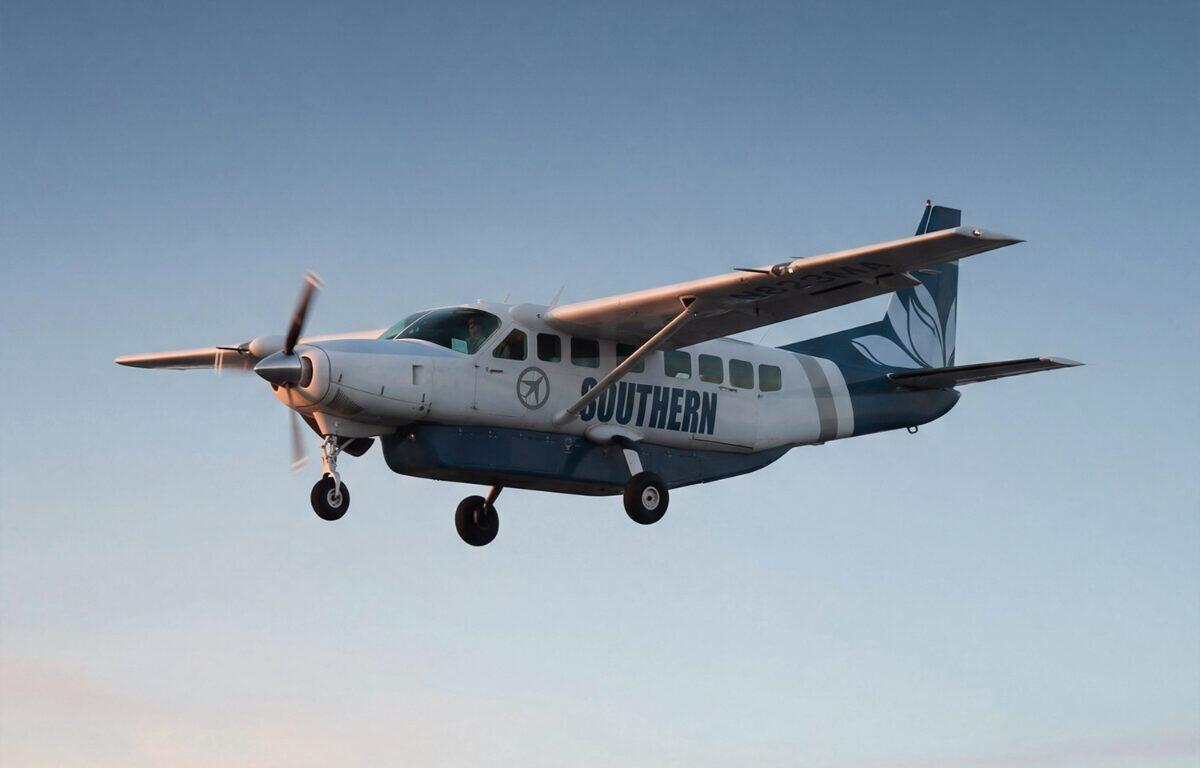

Jonesboro, AR – JonesboroRightNow.com – Southern Airways has adjusted its local flight schedule to meet shifting community demand, doubling the number of weekly flights to Nashville while scaling back service to St. Louis.
Previously, the airline provided 12 weekly flights to St. Louis and six to Nashville. That pattern has now flipped, with Southern operating 12 weekly flights to Nashville and six to St. Louis.
“We’ve gotten a lot of community feedback, and we’re just seeing the demand that more people are wanting to go to Nashville,” Austin Mayer, Southern Airways’ director of business development, said. He added that the service pattern switch is currently in effect.
The route adjustment arrives alongside a newly finalized two-year renewal of Southern’s Essential Air Service (EAS) contract for the Jonesboro market.
| ADD US ON GOOGLE NEWS: Click here to see more local news from Jonesboro Right Now
The federal EAS program, established in the late 1970s, subsidizes commercial air connectivity for approximately 160 to 177 communities across the United States and Puerto Rico. The program was created to keep local travel accessible and economical to rural communities
“Jonesboro is one of those communities that gets Essential Air Service funding,” Mayer said, noting that federal support, along with efficient aircraft and routes, helps keep local passenger fares low.
Jonesboro Airport Manager George Jackson explained that while the Department of Transportation (DOT) ultimately manages and awards the provider contracts, data heavily influenced the local recommendations for this cycle.
“The data showed that there was more people going to Nashville currently than St. Louis,” Jackson said. “We saw them both [as] good options. But we’re currently seeing more people going from Jonesboro to Nashville and back.”
Jackson noted that St. Louis remains a vital destination for specific community needs, including medical transit and academic commutes. “We see a lot of people out of Jonesboro going to Barnes-Jewish Hospital for treatments. And then we do see a lot of college between St. Louis University and ASU,” he added.
A benefit of the local service is Southern’s existing interline agreements with major legacy carriers, including American Airlines, United Airlines, and Alaska Airlines. These agreements mean passengers can book tickets from Jonesboro to major domestic and international hubs.
“It builds you the connections,” Mayer said of booking through Southern’s online booking system. “We would fly you to Nashville or to St. Louis, and then you would get on the next carrier… and basically, your bags would go through. It’s all one ticket. It’s seamless.”
The integration also makes Jonesboro an option for inbound travelers booking via major airline websites. “It puts Jonesboro on the map,” Mayer added. “As an economic driver, as getting business people in, it’s a really great tool to have.”
Airport leadership said using the local terminal can offset the costs of driving to larger regional hubs such as Memphis.
“Jonesboro does offer free parking,” Jackson said, emphasizing the convenience of the one-hour flight time to either hub. “That kind of washes with Memphis by the time you pay the parking and the hour drive there. It’s pretty nice to be able to come back to Jonesboro from your destination and be at home.”
Because the EAS program relies on consistent community utilization, Jackson stressed that local passenger volume is vital to maintaining the federal subsidy.
“On this subsidy, there are trigger points on ridership, or they call it enplanements,” Jackson said. “If you drop below minimums, then the service is jeopardized as to losing it. So, it’s like you have to keep the numbers up. It kind of comes down to the people and the use to make it work.”
He clarified that once a municipality loses its standing in the EAS program, it cannot re-enter. “You’re either in it, or you’re out of it,” he said. “We’re in it, and hope to stay in it.”
Jackson also noted that regional infrastructure must be upgraded before conversations around attracting major commercial carriers, such as Delta or Southwest, can realistically occur.
The airport is currently undergoing a series of upgrades, including a completed runway-strengthening and an upcoming runway-lengthening project.
A new terminal building is also under construction and is slated for completion between late 2026 and early 2027, and will sit alongside new aircraft storage hangars.
Jackson added that when commercial service is mentioned, “everybody’s mind goes to kind of Delta, Southwest, the majors. I would hope to be in the future, but the market has to support it,” Jackson said. “We have to show that there’s a market for Jonesboro for that to happen. The area keeps growing; Northeast Arkansas keeps growing. It’s a good possibility, but you can’t even entertain it until we have these projects in place and be able to support it on the front end.”
In the meantime, Jonesboro continues to see robust corporate and general aviation activity, with as many as 50 daily flights during peak seasons, which includes corporate jets, military aircraft, and pilot training.
“We have quite a bit of the corporate service,” Jackson said. “We’re seeing an increase in the larger corporate airplanes, which means if the big corporate stuff is coming to Jonesboro, that shows a definite increase in the businesses within Jonesboro.”
Local flights and connecting itineraries can be viewed and booked directly through the airline’s website or via participating major carrier platforms.
| DAILY BRIEF: Sign up for the Jonesboro Right Now Daily Brief Newsletter