



Jonesboro, AR – Jonesboro Right Now – Have you ever noticed a ringing, buzzing, humming, static, or chirping sound in your ears?
This condition is known as tinnitus, and it is very common. Roughly 10% of U.S. adults, about 25 million Americans, have experienced tinnitus within the past year (1). It can range from barely noticeable or mildly annoying to extremely intrusive and aggravating.
Tinnitus itself isn’t a disease; it is a symptom that can have many possible causes.
One of the most common causes of tinnitus is hearing loss. Hearing loss reduces the amount of sound information reaching the brain, and when this happens, the auditory system can change how it responds to sound. Researchers believe these changes may contribute to the development of tinnitus.

Tinnitus is typically more noticeable in quiet situations, such as when reading or lying in bed at night, when environmental sounds are minimized. Most people with tinnitus are able to carry on with daily tasks while their tinnitus remains in the background of their attention.
For others, tinnitus is ever-present and ever-annoying, making conversations, concentrating on tasks, watching television, reading, and other daily activities difficult to complete. This can create stress, fear, fatigue, and irritability, so it is no surprise that individuals with tinnitus are more likely to experience mental health problems such as anxiety and depression.
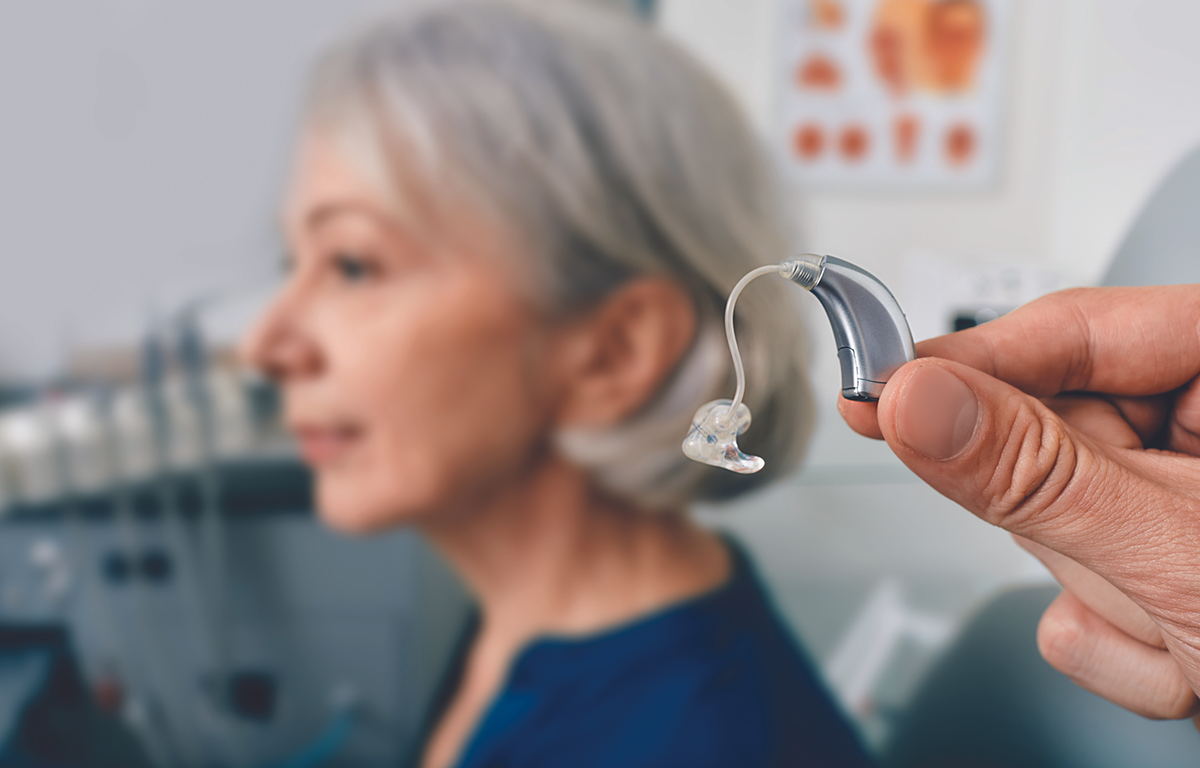
One question I hear often in my office is, “Can hearing aids help with tinnitus?” The answer is: “Yes, particularly when tinnitus occurs along with hearing loss.”
If you have both hearing loss and tinnitus, hearing aids may help in several ways.
First, hearing aids allow you to hear more sounds. When hearing loss causes certain sounds to become difficult to hear, the world around you becomes quieter. Hearing aids restore access to sounds the ears miss.
For some people, that additional sound masks the tinnitus noise in the ears and makes tinnitus less prominent. Picture sitting in a quiet room compared to a room with normal background noise. Tinnitus typically seems much less noticeable when surrounded by other extraneous noises.
Second, hearing aids can help your brain focus on sounds other than your tinnitus. Modern hearing aids are designed to make speech and environmental sounds more accessible. When you’re able to hear the people and sounds around you more easily, your attention will naturally shift away from your tinnitus. This can help tinnitus seem less distracting and disruptive.
Third, some hearing aids offer tinnitus management features. Tinnitus can seem to become louder if you focus on it. This is why it can be particularly loud when laying in bed at night. You may have had someone suggest that sleep with a sound machine. This is a great recommendation because it helps our brain attend to an external sound and not focus internally on the tinnitus.
Many hearing devices can provide a low-level sound machine-type noise which supports this process. This helps to reduce the loudness perception of the tinnitus.
When using hearing aids for tinnitus management, patient outcomes can be different. The goal is to minimize the loudness perception of the tinnitus. Some people report that their tinnitus becomes significantly less noticeable when they wear their hearing aids. A select few patients report they do not hear their tinnitus at all when using their hearing devices. Some note that their tinnitus is unchanged when using their hearing aids. Benefits can vary widely among patients.
Tinnitus is often one of the first signs of a hearing loss. You may still hear people talking, but you might notice that you’re asking others to repeat themselves, turning the television up, struggling in restaurants, or having difficulty understanding certain voices. If you hear ringing, buzzing, humming, or any other persistent sound in your ears, it is important to have your hearing checked.
A hearing evaluation can give us a better understanding of the nature of your tinnitus. We at Harvest Hearing would be glad to help you learn about your hearing function and to discuss your treatment options. You don’t have to navigate tinnitus alone. Contact Harvest Hearing today to schedule your comprehensive hearing evaluation.
To set up an appointment, call 870-336-7313. Harvest Hearing is located at 2704 Alexander Drive, Suite D1, in Jonesboro.