


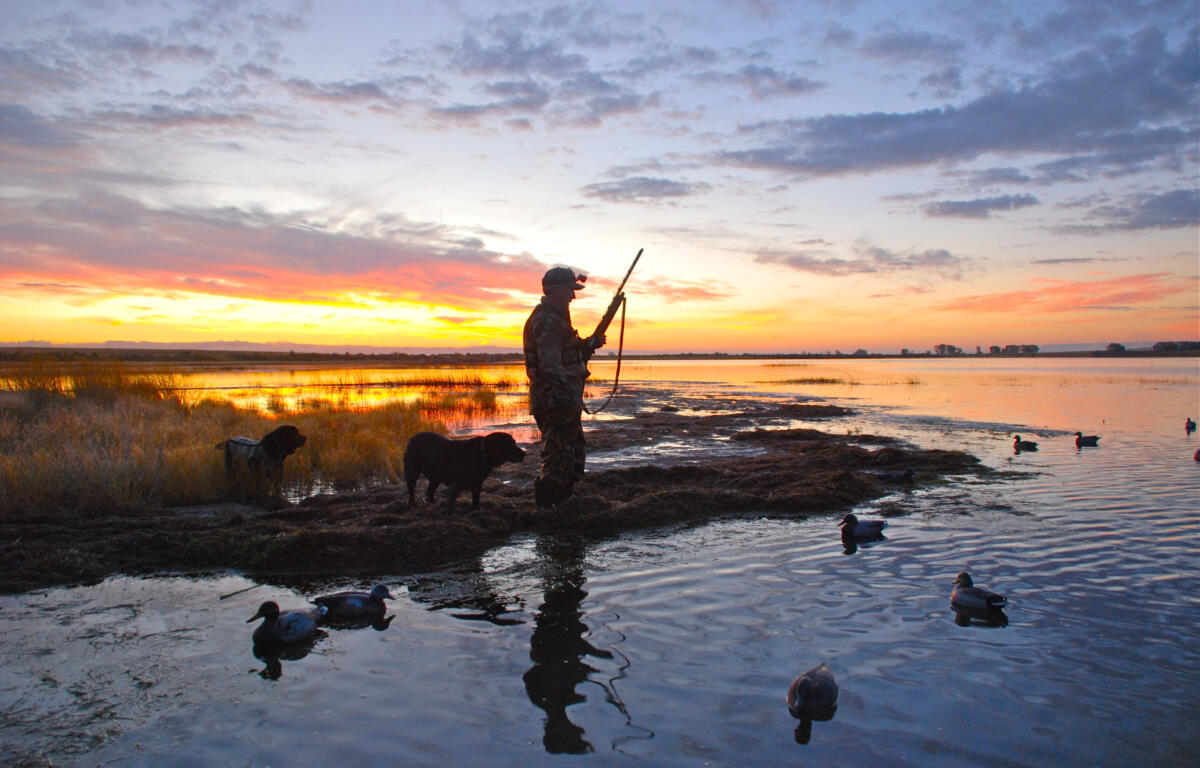

Little Rock, AR – Jonesboro Right Now – The Arkansas Game and Fish Commission has unanimously approved a series of regulation changes governing waterfowl hunting on a portion of the St. Francis Sunken Lands Wildlife Management Area, creating a new permit-hunt system for the area while giving agency staff and commissioners considerable flexibility to adjust the size and number of hunting locations as conditions change.
The action came Thursday during the commission’s August meeting in Little Rock, roughly a month after AGFC first proposed placing approximately 1,000 acres of the St. Francis Sunken Lands under a daily permit-draw system. The original proposal generated significant opposition among Northeast Arkansas hunters, who argued that another major change to the area would restrict public access and disrupt generations of hunting traditions.
The final regulations approved Thursday retain the basic permit-draw concept but include several significant changes from the proposal presented in July.
| READ MORE: Proposed Changes to St. Francis Sunken Lands Hunting Spark Growing Opposition in Northeast Arkansas
Among them:
- Hunt periods may last up to four days, rather than being limited to single-day hunts.
- A successful permit holder may bring up to seven guests, allowing a total hunting party of eight.
- Permit holders will be allowed to leave their hunting blinds in place during the permit hunt, rather than having to remove them at the end of each day’s shooting hours.
- The exact size and number of permit-hunting locations will not be written into the regulation itself. Instead, AGFC will establish the permit unit boundaries and designated locations on its official public-use map.
- Commissioners have directed agency staff to significantly reduce the size of the permit unit from the roughly 4.5-mile-long area originally discussed.
- Commissioners also provided guidance that the initial number of designated permit stations should be in the range of five to nine, depending on the size of the permit area, water levels and hunting conditions.
That last issue prompted a lengthy discussion Thursday morning about how much flexibility the commission has left itself to respond if conditions on the river change.
| ADD US ON GOOGLE NEWS: Click here to see more local news from Jonesboro Right Now
Commissioners want flexibility
Brad Carner, deputy director of the Arkansas Game and Fish Commission, told commissioners that the exact number and location of permit stations will not be contained in the regulation package.
Instead, those locations will be established through the agency’s public-use map.
Carner said that approach is similar to the way other WMA permit hunts are managed. In some other areas, AGFC establishes a larger number of potential hunting locations on a map, but the number actually available for a particular hunt can change depending upon whether the locations have adequate water and other conditions.
That flexibility became important during a discussion with Commissioner Chris Caldwell.
Caldwell asked whether the commission had left itself enough room to increase or decrease the number of available hunting stations quickly if conditions during the duck season warranted a change.
In particular, Caldwell questioned what would happen if the commission’s initial guidance of five to nine locations proved inadequate.
What if, he asked, conditions indicated that hunters needed 12 locations—or only three?
AGFC staff explained that the number of locations itself is not part of the regulation. Because the precise locations and number are established on the public-use map, the agency has more flexibility to adjust the hunt as conditions change without reopening the underlying regulation.
Carner said the commission could potentially spread the designated locations farther apart as a temporary solution if additional hunting opportunity was needed.
Another AGFC official told commissioners the agency had already placed notice for another meeting in anticipation that changes to the map could be discussed.
The exchange appeared to reassure Caldwell that the commission had not locked itself into a fixed number of hunting locations that could only be changed through a lengthy rulemaking process.
Final plan differs from July proposal
The changes approved Thursday represent a notable evolution from the plan initially presented to the public in July.
When the proposal was first announced, AGFC described a roughly 1,000-acre permit area along nearly five miles of the St. Francis River. Hunters who won a permit would be assigned a marked hunting location, remain within 150 yards of that location and bring up to three companions. Applications would be made weekly for individual hunt days.
The proposal was presented as a way to address longstanding concerns about crowding, intense hunting pressure and conflicts in the popular St. Francis Lake—or “Wide Water”—area.
Those details generated significant concern among local hunters.
John Stuckey, vice president of the St. Francis Lake Association, told Jonesboro Right Now that hunters had already invested thousands of dollars in floating pontoon blinds and boats after AGFC eliminated permanent duck blinds in 2012.
Stuckey argued that putting the area into a lottery system could make those investments much less useful because hunters would no longer be assured they could hunt when they wanted.
Trumann Mayor Jay Paul Woods also opposed the original proposal, arguing that it would reduce opportunities for local hunters and potentially interfere with traditions that have been passed from generation to generation.
Hunters get more people in the boat
One of the clearest changes from the original proposal is the size of the hunting party.
The July proposal would have allowed a successful hunter to bring three hunting companions—a total of four hunters.
The final regulation increases that to eight people total: the permit holder plus up to seven guests.
Carner said the change was made in response to public comments received after the original proposal was released.
That change could be particularly significant for families and groups of friends who traditionally hunt together on the St. Francis.
Blinds can remain during the hunt period
The commission also approved an exception allowing permit holders in the St. Francis River Permit Unit to leave their blinds in place throughout their permitted hunt period.
Under the broader WMA rules, hunting blinds generally have to be removed after shooting hours.
The new St. Francis provision recognizes that the permit hunts can extend for multiple days.
Carner explained that the exception means a hunter’s property must be removed after the permit period concludes, rather than after each individual day.
The final regulations also clarify requirements concerning personal property and properly permitted structures on navigable waters within WMA zones.
Navigable river issue addressed
The question of whether AGFC could regulate hunting activity on the navigable St. Francis River was one of the most contentious issues raised by opponents of the proposal.
The final regulation package includes changes to the language governing waters and submerged lands within or adjacent to WMAs.
Carner said the revisions clarify exceptions involving properly permitted structures and public use of navigable rivers.
Another revision clarifies that non-hunting and non-fishing activities on navigable waters within WMA boundaries are not restricted by the WMA’s hunting access-time regulations.
That distinction is significant because opponents had argued that boating and fishing activity should not be treated the same as hunting if AGFC’s purpose is to reduce disturbance to waterfowl.
The debate isn’t necessarily over
While Thursday’s vote establishes the regulatory framework for the new St. Francis River Permit Unit, commissioners did not approve a final map showing the precise boundaries and number of hunting stations.
Instead, AGFC staff will return with a revised map reflecting the commission’s direction to significantly reduce the permit area from the original proposal.
The exact number and placement of hunting stations will be established through that public-use map rather than through the regulation itself.
That means the commission has approved the permit system, but some of the most important practical details—exactly how large the permit unit will be and exactly where hunters will be allowed to hunt—remain to be determined.
And that was precisely the point Commissioner Caldwell wanted clarified before Thursday’s vote.
He said he wanted to make sure the commission had not unintentionally limited its ability to respond quickly if water levels, hunting conditions or other circumstances change during the season.
AGFC staff indicated that the map-based system should provide that flexibility.
A long-running fight over access
The controversy is the latest chapter in a long-running debate over how the St. Francis Sunken Lands should be managed.
For generations, hunters used permanent duck blinds throughout the area. AGFC eliminated those permanent blinds in 2012, prompting hunters to adapt by purchasing floating pontoon-style blinds and boats.
Local hunters say they complied with that change and invested substantial money in the new equipment.
Now, the permit system represents another fundamental change.
AGFC, meanwhile, has maintained that the proposal is intended to address crowding and hunting pressure in one of the most heavily used waterfowl areas in the region. The commission initially described the proposal as similar to permit hunts already used on 10 other WMAs.
The St. Francis Sunken Lands itself encompasses roughly 30,000 acres, with the proposed permit area representing only a portion of the WMA.
For the hunters who have spent generations on the river, however, the debate has never been simply about the number of ducks that can be harvested.
Stuckey and other local hunters have described the Sunken Lands as a place where parents, grandparents and children have built family traditions, friendships and a connection to the outdoors.
The question now is how the newly approved permit system will work once the final map is established—and whether the changes will accomplish AGFC’s goal of reducing crowding while preserving meaningful public hunting opportunities on the St. Francis.
Correction: In the story, Commissioner Chris Caldwell was incorrectly identified as Steve Caldwell and has been fixed.
| DAILY BRIEF: Sign up for the Jonesboro Right Now Daily Brief Newsletter