


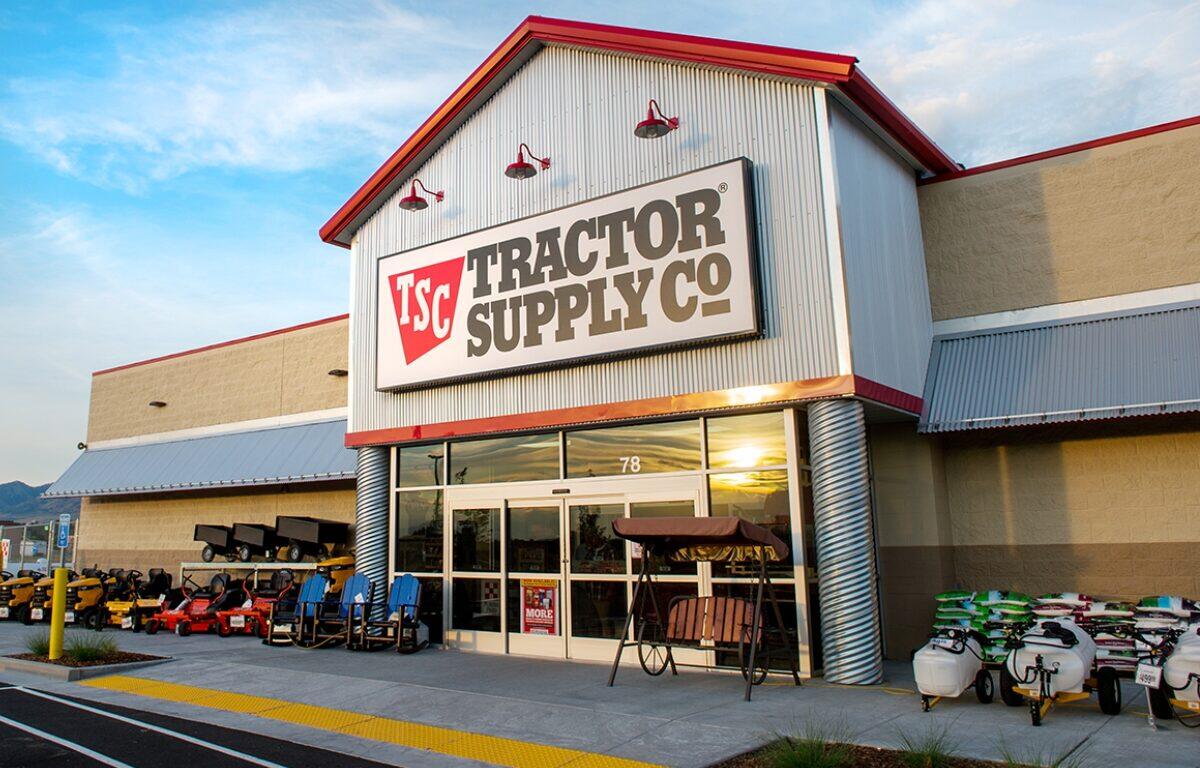

Jonesboro, AR – Jonesboro Right Now – Tractor Supply Co.’s (TSC) growth is creating challenges for both the farm and ranch store and the city of Jonesboro as zoning issues come to light over development plans.
Following a variance denial at a recent Board of Zoning Adjustments (BZA) meeting, the city of Jonesboro is working to clarify the application of its redevelopment codes and explore a potential compromise with TSC regarding the project.
On July 21, members heard three requests submitted by TSC to retrofit the vacant building at 2308 South Caraway Road, which was long home to Fred’s and has recently been the location for a Spirit Halloween.
| ADD US ON GOOGLE NEWS: Click here to see more local news from Jonesboro Right Now
Two of those requests were approved: 1) A variance to exceed the maximum 6-foot fence height, allowing a 12-foot chain-link screening wall for a 20,000-square-foot outdoor display area, and 2) a variance exempting the site from a 10-foot interior side setback requirement for the existing building in the C-3 zone.
However, the BZA denied a third request to waive the requirement to provide cross-access to the adjacent property to the south.
JRN spoke with the city about the decision and what is being done to reach a compromise.
The Trigger
In an email from Mayor Harold Copenhaver addressed to city council members, he explained that TSC is adding “significant square footage” to the property, legally triggering redevelopment codes adopted in the city’s 2020 Master Street/Access Management Plan.
The city’s Chief Operating Officer Tony Thomas told JRN that the cross-access requirement is designed to decrease congestion along the street and allow movement from lot to lot without drivers having to use the main road.
While public dialogue on social media and elsewhere suggested that the building’s footprint remained unchanged, Thomas noted the pavement for the new outdoor storage yard acts as the legal trigger for the redevelopment code.
“Although they’re not looking to do anything structurally different to the existing building, the new pavement and storage yards in the rear triggers that 20% improvement threshold,” he said.
Copenhaver clarified that the required cross-access does not need to be physically built at this time. Rather, it must be identified on a plat on the south side of the lot, outside of the right of way.
He added that the physical connection would only be constructed if the neighboring property, 2406 S. Caraway Road (the former Dixie Cafe location), is significantly altered by more than 20% of its current square footage. Until then, TSC can use the parking lot as it sees fit.
“There’s no requirement for constructing that cross access at this particular point in time, but it just allows for future connections in the event the property next door to them is redeveloped,” Thomas said.
The Developer’s Narrative
In the variance application narrative submitted by TSC’s engineering firm, the developer emphasized its intent to keep the existing parking area parameters from the building’s original design. The engineers stated that forcing a cross-access driveway to the south would “create geometric problems within the parking arrangement and drive aisles.”
The developers noted that an existing cross-access to the north will remain intact, but there is currently no legal easement to make a connection to the adjacent southern property. According to Thomas, the developer has communicated that designating this cross-access is not something TSC finds acceptable.
However, the city maintains that the requirement does not mandate a replatting or an immediate construction project to alter those existing constraints.
“All it requires is, on the development drawing, to show where a future access point can be provided,” he said.
Furthermore, Thomas noted the city is not aware of any short-term or long-term redevelopment plans for the neighboring property, meaning a physical driveway might never actually be required. He pointed out that the neighboring property was recently renovated without expanding its footprint, which avoided triggering the 20% rule.
Thomas added that even if that property were to be redeveloped in the future, a shared agreement between the two property owners would still need to be established before any physical cross-access could be constructed.
Coming to a Compromise
In Copenhaver’s email, he explained that city officials met with TSC a day after the BZA meeting to clarify the city codes and potential solutions.
Thomas stated that TSC developers have recently worked with the adjoining property owner, who submitted a letter regarding the project. The developers have requested an additional meeting with the Board of Zoning Adjustments, which is anticipated for Aug. 11.
If a compromise is not reached through the BZA, the city’s zoning appeals process permits aggrieved parties to formally appeal the decision to a circuit court.
“We have rules and we have regulations and parameters that have been passed by our city council that we work with on a day in and a day out basis,” Thomas said. “We don’t just willy-nilly pick where we apply those and how we apply those. We apply the law, and we try to do that in as equitable a manner as possible.”
| DAILY BRIEF: Sign up for the Jonesboro Right Now Daily Brief Newsletter