


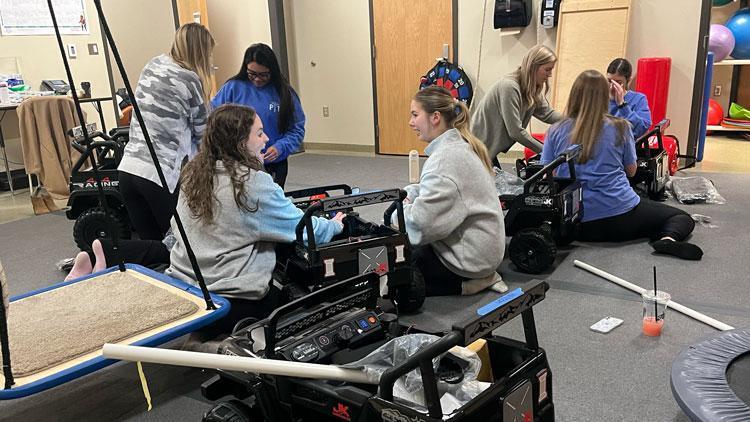

Jonesboro, AR – (Contributed) – A group of students at Arkansas State University is striving to make the world more accessible and allow disabled children to play like other kids.
“Electric ride-on cars are toy cars that you would normally see a kiddo riding around, like a jeep or small truck,” said Dr. Rachel Wilkins, director of clinical education for the Doctor of Physical Therapy (DPT) program.
Wilkins said those types of cars are not usable by all children.
“Because many of our patients are unable to use their arms and legs the same as typically developing kids, we modify the steering methods or propulsion methods of the toy cars to allow children with special needs to be able to attempt to drive them independently.”
This is made possible thanks to partners who secure the funding to purchase the toy cars for the children and supply the equipment to retrofit them.
“DPT partners with Go Baby Go, a national community-based research design and outreach program, and The Growing Minds Foundation to provide these electric ride-on cars,” said Abby Cromer, a third-year DPT major from Rome, Ga.
This is the third year A-State has participated in this program. The first year, they were able to gift one electric ride-on car; three were provided the second year, and seven will be gifted this year in a ceremony at 11 a.m. on Friday, Dec. 12, in the lobby of the Donald W. Reynolds Center for Health Sciences.
The members of Wilkins’ pediatrics special topics physical therapy class said they have enjoyed participating in this project and learning new ways to help future patients.
“Being part of the A-State DPT program brings me closer to helping others regain their independence and return to activities that bring them joy,” said Sarah Ignalig, a third-year graduate student from Memphis in the DPT program. “Making an impact on others, whether big or small, is something I have always strived for. This program is helping to shape me to become the best physical therapist I can be for my patients.”
“Through this process, I have learned ways to be creative with my PT treatments to meet the needs of every individual patient. This will better prepare and equip them to be able to participate in activities with other children,” said Cromer.
“The students and I adapt the ride-on cars based on the individual needs of the child. This year, we even got help from a student from the engineering college to help with electrical adaptation needs,” added Wilkins.
Ignalig said the adaptations that have been made will allow the recipients to experience something they otherwise would not be able to have. Wilkins said these types of devices are not covered by insurance, but thanks to programs like those involved in this project, these kids will get to experience this freedom of movement.
“Many cars use large activation buttons to make them move, since some children can’t control their feet,” Ignalig added. “For kids with limited hand control, we added a PVC pipe over the button, allowing them to press it more easily and to also use it to help steer. Every car includes a safety harness, and for children with poor trunk control, we added a kickboard behind their back for extra support. Some allow parental control for the movement of the car.”
“Having these adaptations gives children the opportunity to feel included because many of these toys are not advertised for children with disabilities,” Cromer concluded.